Lipase for Fat and Odor Control in Shrimp Shell Processing
Shrimp shell processing plants do not only fight protein. Residual fat, tissue oils, and unstable organic load can create odor pressure, greasy deposits, inconsistent liquor separation, and higher cleaning demand across the line.
Carapax Flow supplies lipase for plants that need a practical pre-treatment tool before deproteinization and chitin extraction. Used correctly, lipase helps break down lipid residues so the shell stream runs cleaner, downstream chemistry works more predictably, and plant hygiene is easier to control.
If you are looking for an enzyme supplier for chitin extraction with operational focus, Carapax Flow supports lipase selection, process-fit review, and supply planning for industrial shrimp shell processors.
Why fat control matters in shrimp shell processing
Residual lipids are easy to underestimate. Even when the shell stream looks mostly mineral and protein-based, attached tissue and shell-surface oils can affect the rest of the process.
Common plant issues include:
- Greasy deposits on conveyors, tanks, screens, and transfer lines
- Higher odor formation during holding, warming, and mixing
- Unstable foam and scum during liquid handling
- More difficult rinse-down and sanitation
- Lower consistency before protease or alkaline deproteinization
- Higher chemical demand to reach the same cleaning or extraction result
- Variable batch behavior depending on raw material freshness and shell mix
Lipase is not a substitute for good raw material control. It is a targeted processing aid for lipid management when fat is creating operational drag.
Where lipase fits in the chitin extraction line
Lipase is typically considered as a pre-treatment or co-treatment step before the main deproteinization stage. The goal is to reduce lipid interference early enough that the following stages perform more cleanly.
A typical integration point may include:
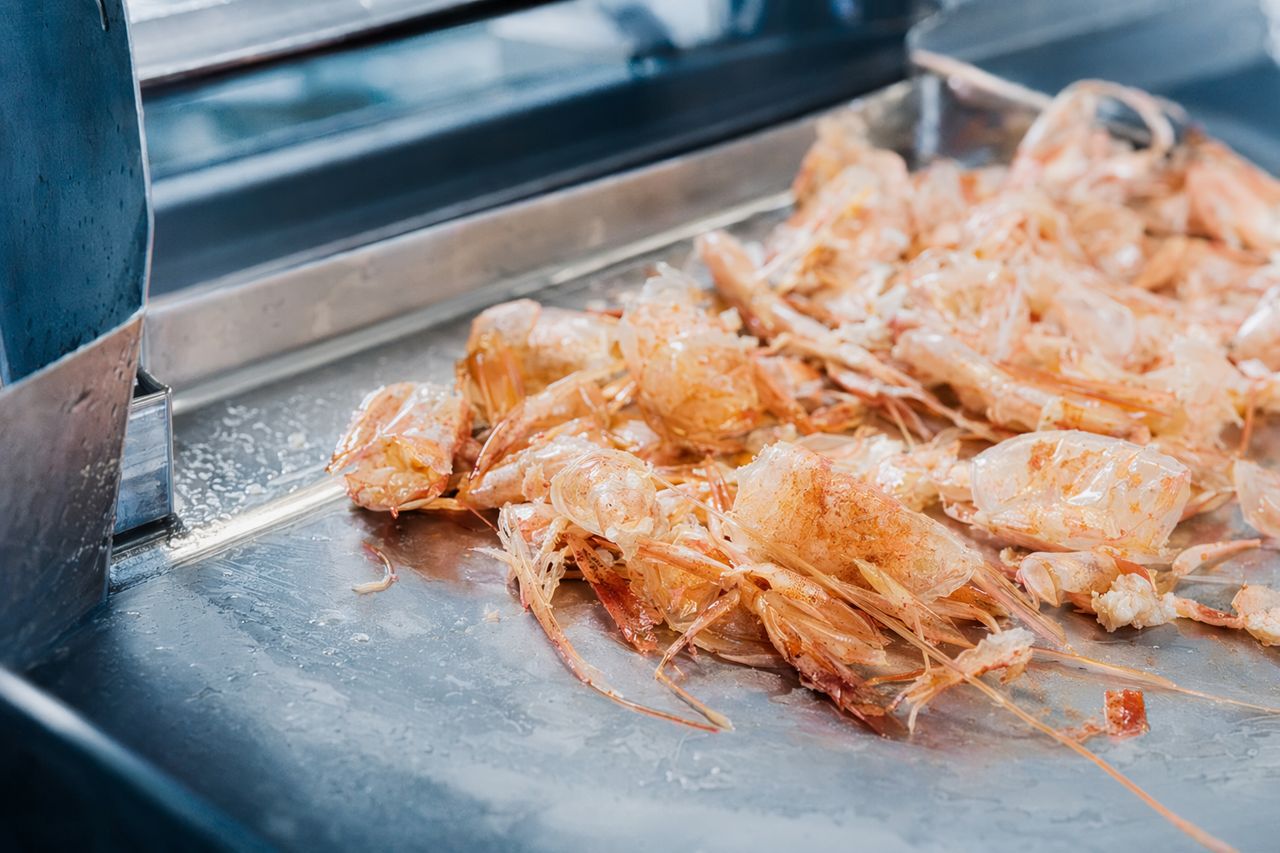
- Shell receiving and size reduction
- Rinsing or controlled hydration
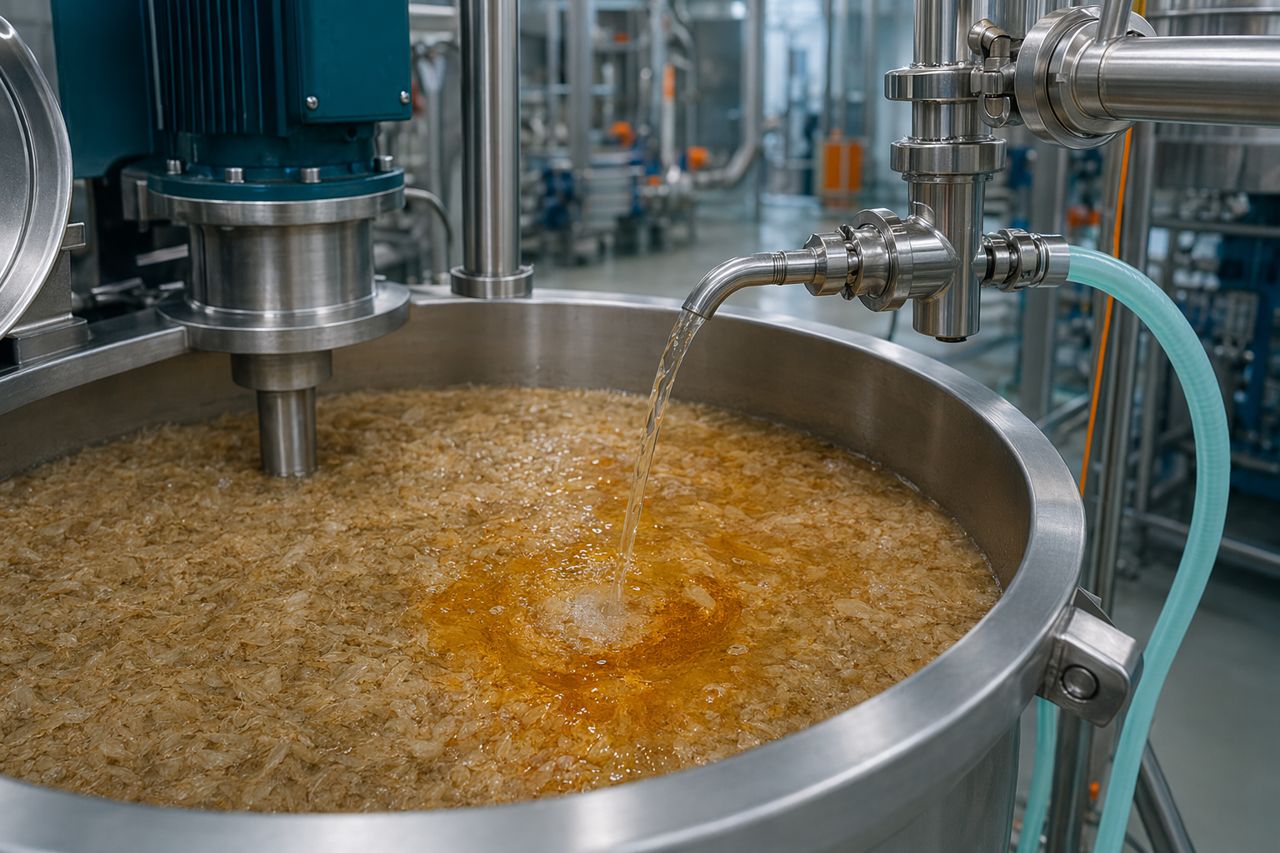
- Lipase pre-treatment for fat breakdown
- Protease-assisted or chemical deproteinization
- Demineralization, washing, and solids recovery
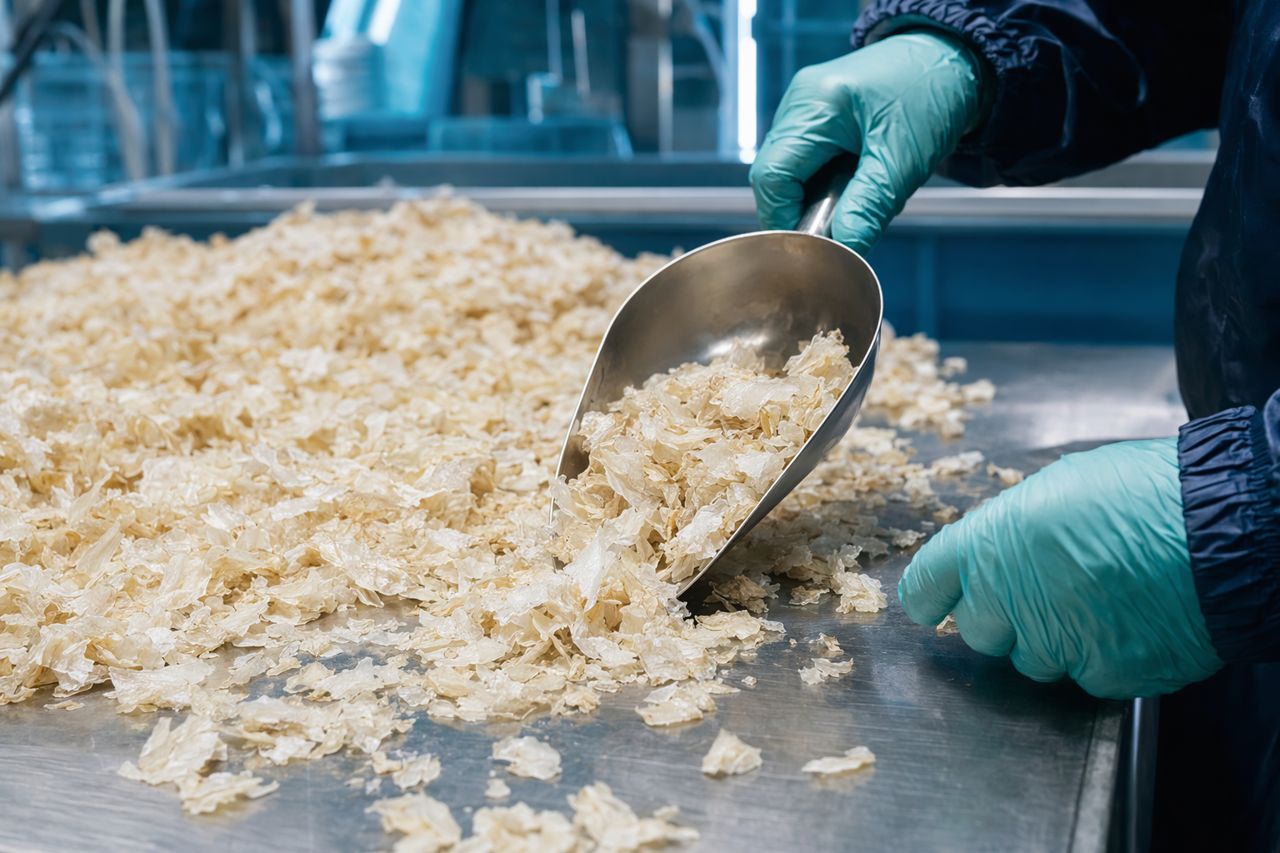
- Chitin flake inspection and downstream conversion planning
Carapax Flow works with plant teams to match lipase handling to existing tank geometry, residence time, agitation, pH profile, and temperature window. The value is not just enzyme addition. The value is stable contact between enzyme, fat residue, and shell surface under realistic plant conditions.
Operational value for plant managers
Lower odor pressure
Fat-rich residues contribute to rancid and marine off-odors, especially when shells wait before processing or when warm process conditions accelerate breakdown. Lipase treatment helps reduce lipid load before it becomes a bigger hygiene and odor-control problem.
Cleaner downstream processing
When shell surfaces carry less lipid interference, deproteinization stages can operate with better contact and more predictable separation. That can support cleaner liquor handling, easier rinsing, and more consistent solids quality.
Reduced chemical load potential
Plants often compensate for fat and residue with stronger cleaning chemistry, longer washing, or harsher alkaline treatment. A lipase pre-treatment strategy may help reduce that dependency by addressing part of the organic load enzymatically before aggressive chemistry is required.
Better batch consistency
Shrimp shell feedstock changes by species, season, peeling method, freshness, and storage time. A defined lipase step can help narrow the operating gap between high-fat and lower-fat incoming loads.
Improved plant hygiene
Less greasy fouling means fewer persistent deposits on stainless surfaces, screens, pumps, and drains. That supports faster turnaround, better housekeeping, and lower odor complaints around wet processing zones.
What Carapax Flow supplies
Carapax Flow provides industrial lipase solutions for shrimp shell processing plants that need practical performance, reliable documentation, and repeatable supply.
Our support includes:
- Lipase product selection for shrimp shell lipid profiles
- Compatibility review with your current pre-treatment and deproteinization sequence
- Guidance for dosing strategy development without disrupting plant flow
- Batch-to-batch supply consistency and production planning support
- Documentation for receiving, storage, and internal process review
- Scale-up support from pilot trials to routine production
We focus on the way your plant actually runs: mixed shell streams, tight holding windows, sanitation pressure, wastewater constraints, and the need for predictable chitin output.
Lipase plus protease: a cleaner extraction strategy
Many shrimp shell processors evaluate lipase alongside protease. The two enzymes solve different problems.
- Lipase targets residual oils, fats, and lipid-related odor contributors.
- Protease targets attached proteins and tissue residues that interfere with chitin recovery.
Used in the right sequence, the combination can support stronger deproteinization performance, cleaner solids, and more controlled downstream washing. The exact approach depends on your shell composition, available tanks, process temperature, and whether your line is designed for enzymatic, chemical, or hybrid extraction.
Carapax Flow can review your current process map and recommend where lipase has the highest chance of delivering measurable plant value.
Process considerations before implementation
Before quoting a lipase program, we typically ask about:
- Raw shell source, freshness, and storage time
- Shell particle size and solids loading
- Existing rinse, hydration, and holding steps
- Current odor-control challenges
- Fat-related fouling points in the line
- Deproteinization method and sequence
- Wastewater constraints and discharge priorities
- Target chitin quality and downstream use
- Batch size, cycle time, and required supply continuity
This information helps us recommend a product and trial approach that fits your operating reality instead of forcing a generic enzyme into a complex marine processing line.
Embedded explainer video
A one-minute faceless explainer on this page shows how lipase fits into a shrimp shell pre-treatment stage: shell fragments entering a stainless process tank, enzyme dispersion, lipid release, cleaner liquor separation, and pale chitin flakes moving toward inspection.
The visual style is marine-industrial, clean, and tactile, with no avatar and no worker faces. Subtitles are used for clarity in plant and office environments.
When lipase is a strong fit
Lipase is worth evaluating when your plant is dealing with:
- Noticeable greasy residue in shell handling or tanks
- Marine rancid odor during holding or extraction
- Variable deproteinization results between batches
- Excessive cleaning time after high-fat shell runs
- Wastewater loading concerns linked to organic residues
- Interest in lowering harsh chemical dependency
- A need for more consistent chitin flake appearance
If these issues are recurring, the cost of doing nothing is usually hidden in downtime, cleaning labor, chemical use, odor management, and inconsistent downstream yield.
Request a quote
Tell us about your shrimp shell stream, current process sequence, and the operating issue you want to solve. Carapax Flow will respond with a practical lipase supply recommendation and next-step trial plan.
Request a quote using the on-site contact form. Include your plant location, approximate processing volume, current extraction method, and whether fat control, odor reduction, or batch consistency is your main priority.