Enzyme Supplier for Chitin Extraction Plants
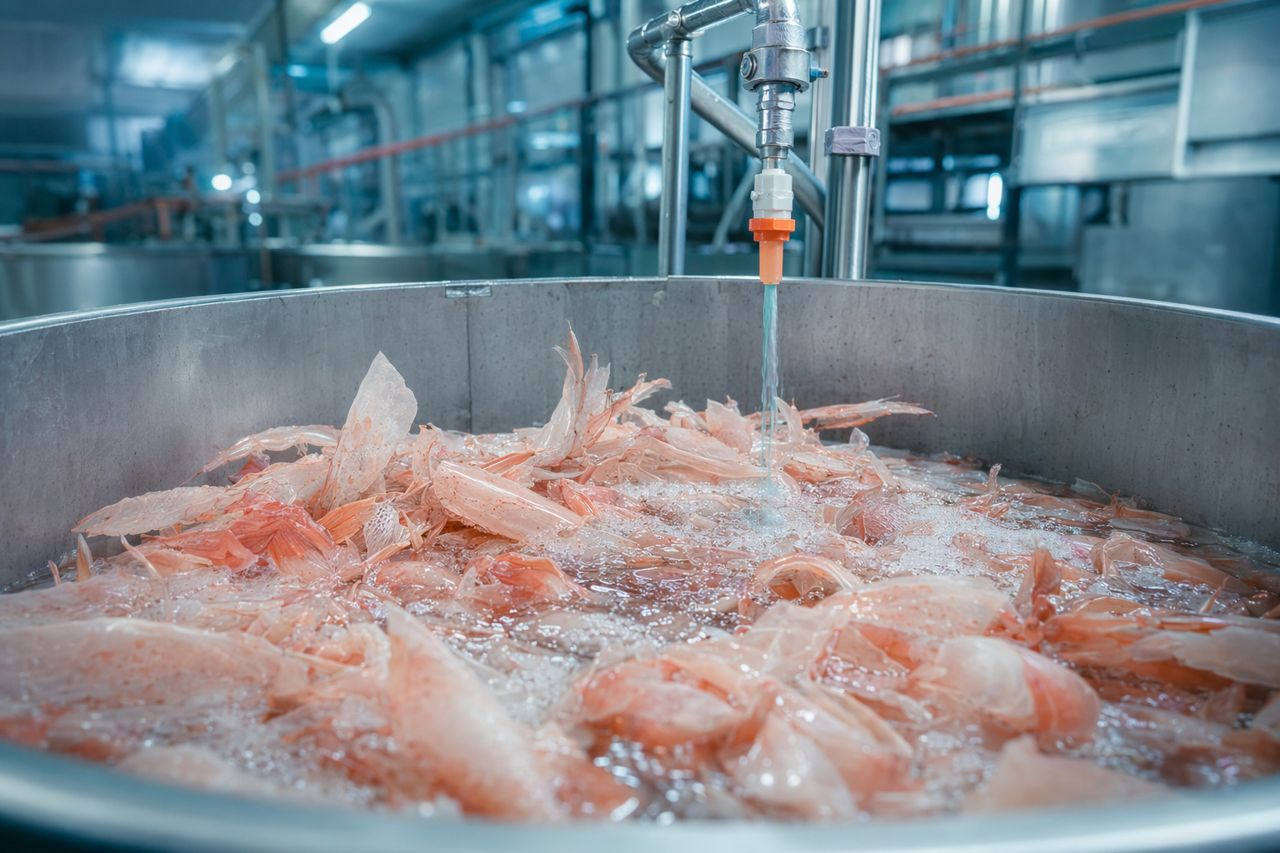
Shrimp shell processing is not a lab exercise. It is a wet, variable, time-sensitive production environment where raw material quality, brine carryover, residual meat, fat content, washing efficiency, and solids handling all affect the final chitin stream.
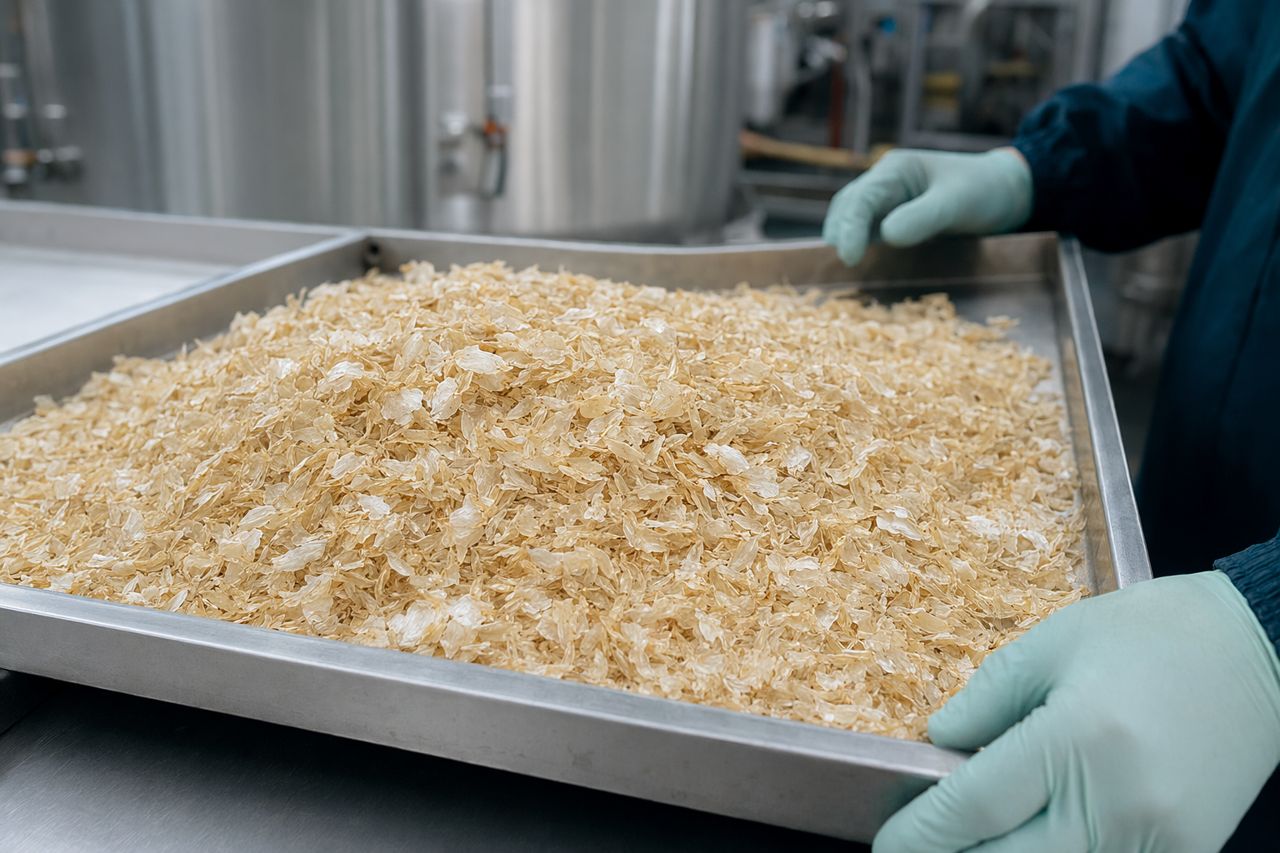
Carapax Flow supplies enzyme solutions for chitin extraction plants that want practical process support without biotech theater. Our focus is straightforward: help production teams improve deproteinization performance, reduce chemical pressure where feasible, support odor control, and keep batches more consistent from shell intake to pale chitin flakes.
If you are evaluating an enzyme supplier for chitin extraction, we help you identify where protease, lipase, and selective chitinase support can fit into your line without exposing your confidential operating specifications.
Where Enzymes Fit in a Shrimp Shell Processing Line
Enzyme-assisted extraction is typically considered around the points where organic residues create the most operational friction: protein binding, lipid carryover, odor generation, wash load, and batch-to-batch variability.
A practical enzyme program may support:
- Pre-treatment of shrimp shells before main deproteinization
- Protein release ahead of or alongside alkaline processing
- Lower residual tissue burden before washing and separation
- Reduced odor drivers from protein and lipid residues
- More consistent chitin color and flake quality
- Better control when raw shell mix changes by season or source
The goal is not to replace every chemical step by default. The goal is to make the extraction line more controllable, more efficient, and easier to validate under plant conditions.
Protease for Deproteinization Support
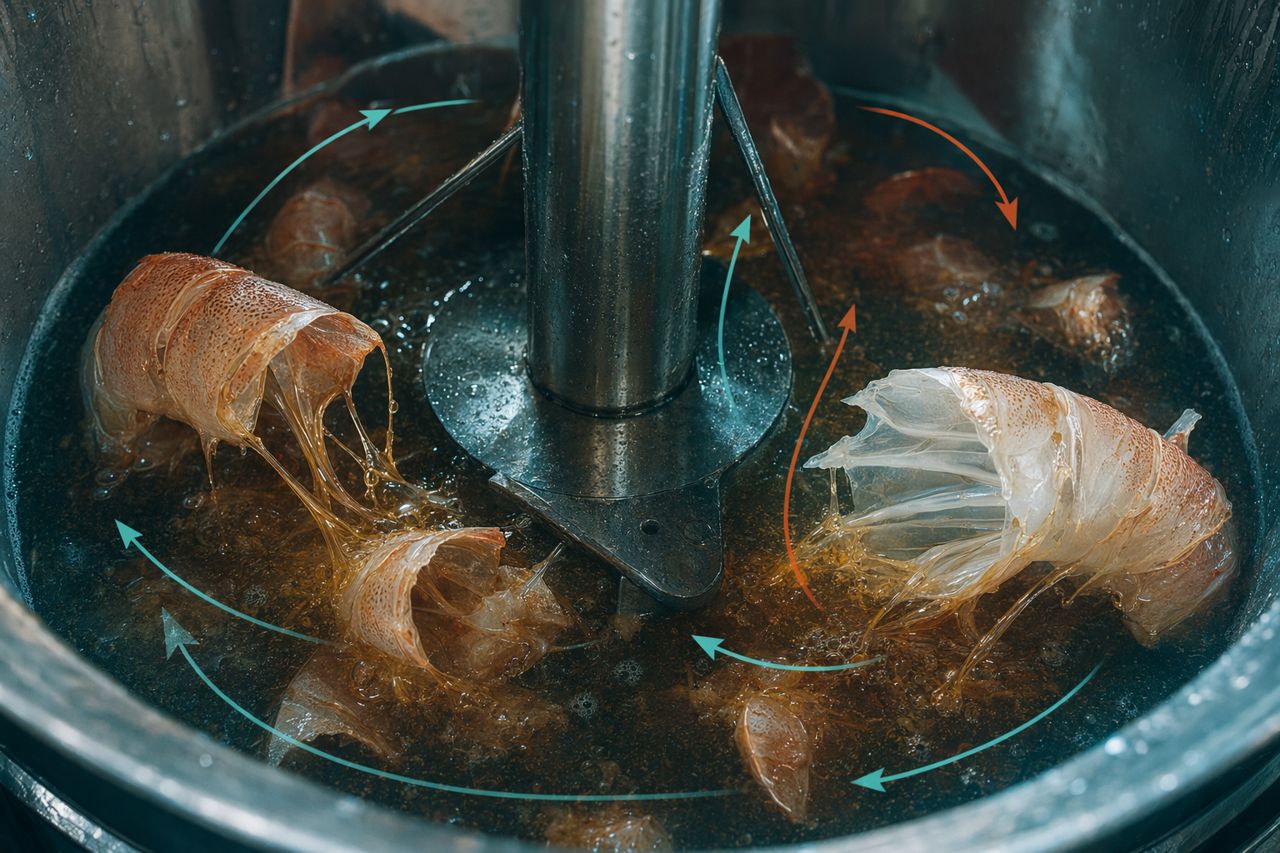
Protease is the primary enzyme class used in enzyme-assisted chitin extraction. In shrimp shell processing, residual protein is bound into a complex shell matrix with minerals, pigments, lipids, and chitin structure.
A well-matched protease can help loosen and hydrolyze protein fractions so they separate more predictably during downstream processing and washing.
Operational value for plant teams
- Improved deproteinization consistency across variable shell lots
- Lower burden on aggressive chemical treatment where the process allows
- Cleaner separation of organic load from chitin-rich solids
- Reduced risk of stubborn residual protein in finished flakes
- Better repeatability between batches and shifts
Carapax Flow does not recommend protease as a generic drum pulled from a catalog. We align enzyme selection with your shell source, pre-rinse practices, solids loading, residence time, mixing intensity, and downstream product target.
Lipase for Fat and Odor Management
Shrimp shell streams can carry residual fat and tissue that contribute to odor, surface film, inconsistent color, and wash inefficiency. Lipase can be used as a support enzyme where lipid residues are a known production issue.
Lipase is not always required. When it is appropriate, it can help reduce lipid-related process drag and improve the behavior of shell solids through washing, separation, and inspection.
When lipase may be worth evaluating
- Shell streams with noticeable fat carryover
- Odor issues during holding, pre-treatment, or extraction
- Product color variability linked to organic residues
- Wash water burden from emulsified or surface-bound material
- Plants seeking cleaner handling before final chitin drying or packing
Selective Chitinase Use Without Damaging the Product Target
Chitinase requires careful positioning. In a chitin extraction plant, uncontrolled chitinase exposure can work against the value of the product. However, selective use may be relevant for plants producing modified chitin streams, improving accessibility in targeted process windows, or preparing material for downstream conversion.
Carapax Flow treats chitinase as a precision tool, not a default additive. We help define whether it belongs in your process and where it should be limited, controlled, or avoided.
Built for Plant Trials, Not Hype
Buying enzymes for chitin extraction is not just a purchasing decision. It affects production planning, raw material handling, tank utilization, wastewater load, operator routines, and finished product acceptance.
Carapax Flow supports B2B buyers with a supplier model designed around plant reality:
- Process-fit enzyme recommendations for shrimp shell processing
- Trial planning based on your existing line constraints
- Batch comparison support for deproteinization and appearance outcomes
- Documentation for procurement and production teams
- Reliable replenishment planning for recurring production
- Practical communication before, during, and after trial runs
We avoid disclosing fixed public specifications because every serious plant has different shell input, timing, chemistry, and product requirements. Instead, we work through a controlled quote and evaluation process.
What We Need to Quote Correctly
To prepare a useful recommendation, we typically ask for operational context rather than proprietary details.
Helpful inputs include:
- Shrimp shell source and general condition on arrival
- Current extraction sequence at a high level
- Main performance problem: protein, odor, fat, color, yield, or consistency
- Desired finished chitin form and quality target
- Existing constraints around tanks, mixing, washing, and separation
- Trial scale and expected production frequency
- Procurement requirements for documentation and delivery reliability
You do not need to send confidential formulas in the first request. Start with the production problem and the material flow. We will identify the right next questions.
Why Plants Choose Carapax Flow
Carapax Flow is built for industrial buyers who need enzyme supply to behave like part of the production system. That means consistent communication, realistic expectations, and recommendations that account for throughput, batch timing, and operator execution.
Our role is to help you evaluate enzyme-assisted chitin extraction with enough technical discipline to make a purchasing decision, without turning your line into an experiment with unclear ownership.
Request a Quote
If you are comparing enzyme suppliers for chitin extraction or planning an enzyme-assisted trial in a shrimp shell processing plant, contact Carapax Flow through the on-site form.
Tell us what you process, what you want to improve, and what constraints matter most. We will respond with a practical supply path and the next steps for evaluation.