Enzyme Support for Chitosan Production Lines
For chitosan producers, the upstream chitin step decides how much trouble appears downstream. Residual protein, inconsistent shell preparation, harsh chemical exposure, and variable raw material quality can all show up later as filtration load, color variation, odor, viscosity inconsistency, or rework.
Carapax Flow supplies enzyme support for shrimp shell processing plants that need cleaner chitin feedstock before deacetylation. Our enzyme programs are designed for operational use: predictable deproteinization support, lower chemical pressure, better batch repeatability, and a supply model built around plant continuity.
If you are looking for an enzyme supplier for chitin extraction with a practical understanding of shrimp shell operations, we help you evaluate where enzymes fit, how they affect your line, and what to test before scale-up.
Why enzymes matter before chitosan production
Chitosan consistency depends on the condition of the chitin entering the deacetylation stage. When shell protein removal is uneven, downstream processing has to compensate.
Enzyme-assisted preparation helps plants target protein release earlier in the process, supporting:
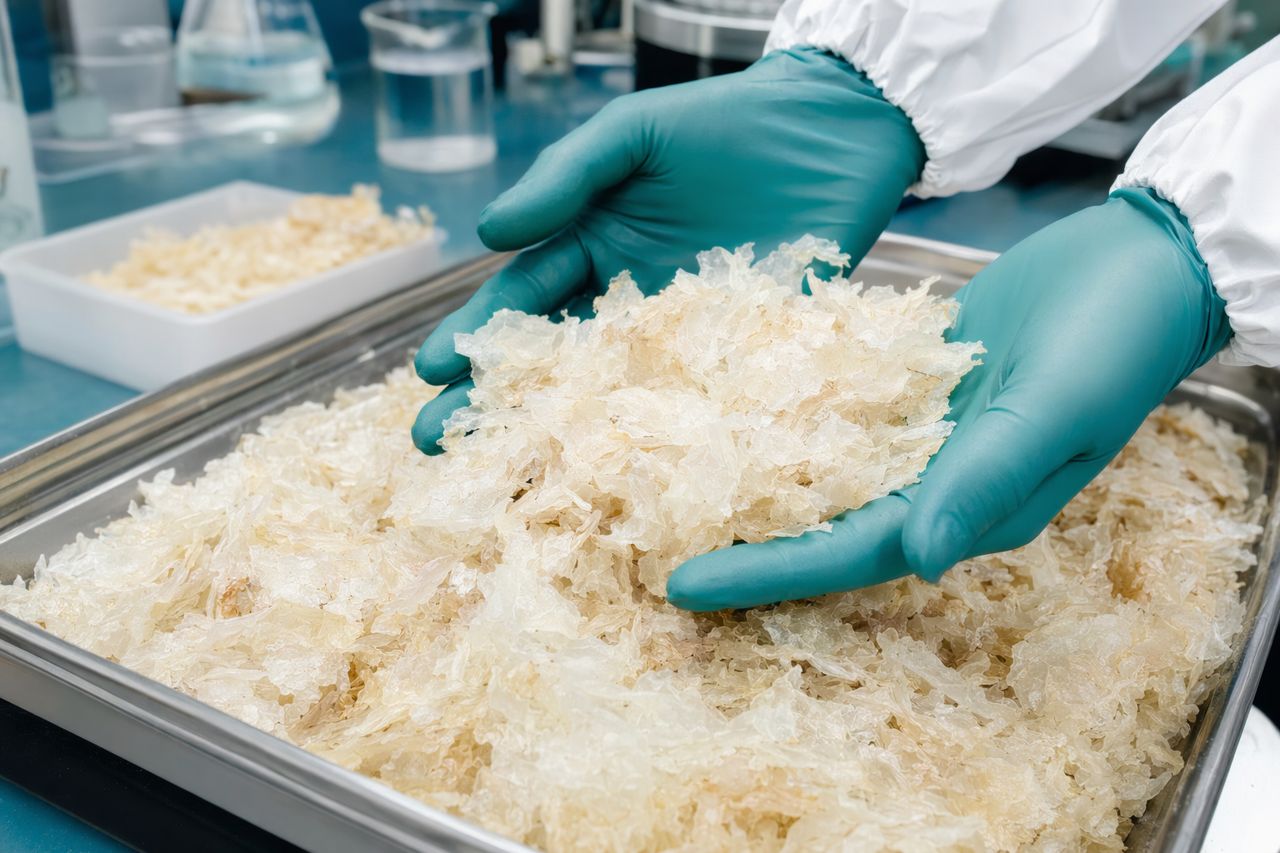
- Cleaner chitin flakes before alkaline treatment
- Lower residual organic load entering later stages
- Reduced dependence on aggressive chemical conditions
- Improved odor control during shell handling and holding
- More consistent downstream chitosan appearance and performance
- Better control across seasonal shell variability
This is not about adding complexity. It is about using a controlled biological step to remove more uncertainty from the front end of the line.
Built for shrimp shell processing plants
Shrimp shell is not a uniform raw material. Species mix, freshness, peeling method, storage time, salt content, and transport conditions can all affect protein attachment and process behavior.
Carapax Flow supports plants working with:
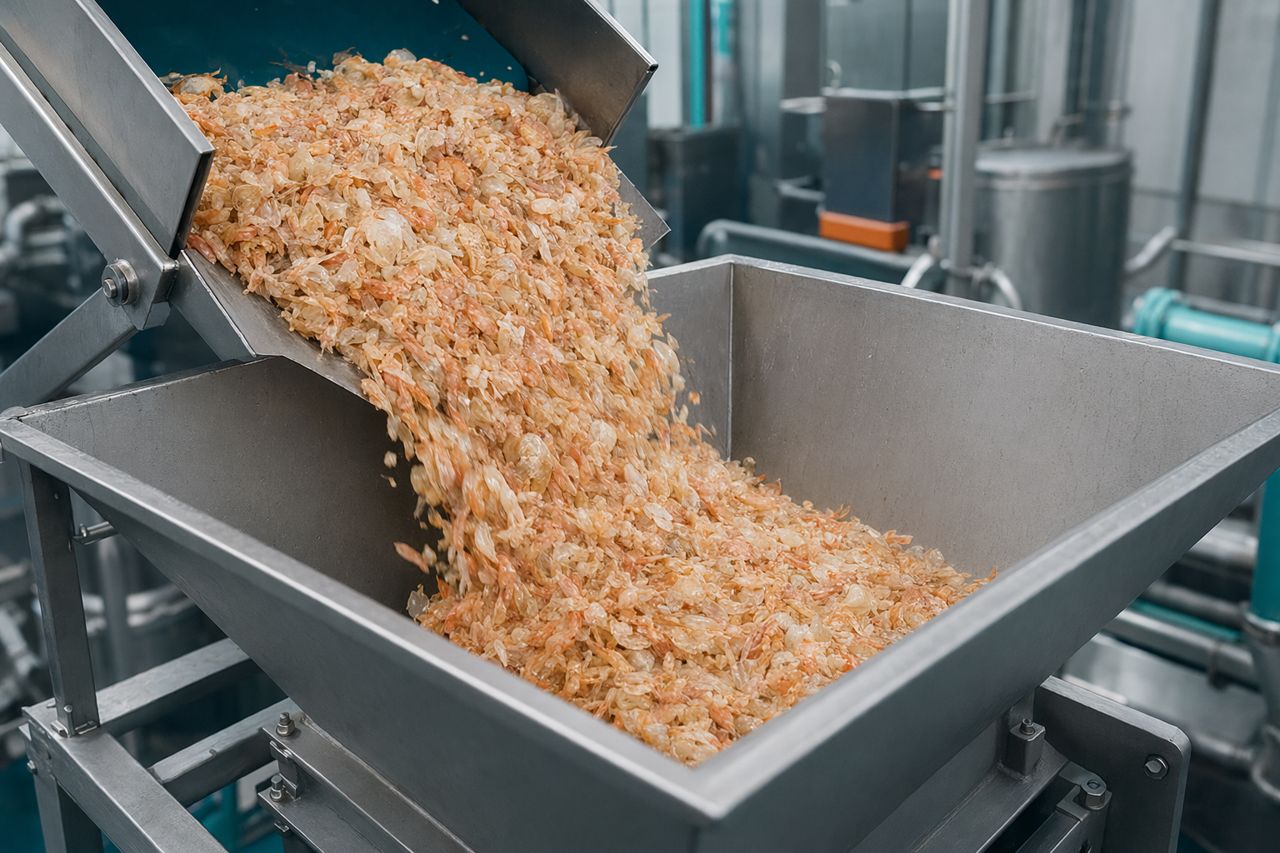
- Fresh or chilled shrimp shell waste
- Pressed shell cake
- Washed shell fractions
- Dried shell material
- Mixed head and shell streams
- Chitin lines supplying internal or external chitosan production
Our focus is on practical fit: tank residence time, agitation, temperature window, pH strategy, discharge behavior, washing demand, odor profile, and how the enzyme step affects the rest of your plant.
Operational benefits for chitosan producers
Stronger deproteinization performance
Targeted enzyme action can help release shell-bound proteins before harsh alkaline treatment. That gives the plant a cleaner chitin stream and can reduce the burden on downstream chemical stages.
Lower chemical load pressure
Many chitosan production lines rely heavily on chemical correction. Enzyme-assisted upstream treatment can support lower chemical intensity, gentler handling, or better process flexibility depending on the plant’s existing route.
Better batch consistency
Variability in shell material often becomes variability in chitosan output. A controlled enzyme step can help narrow the spread between batches by improving protein removal behavior before deacetylation.
Odor and handling improvement
Residual protein is a major contributor to odor and spoilage behavior in shrimp shell processing. Enzyme-supported protein release, combined with disciplined washing and holding practices, can help plants manage odor more effectively.
Higher usable yield potential
Cleaner separation of protein from mineral and chitin fractions can improve the value recovered from the shell stream. The objective is not only extraction, but extraction with less avoidable loss and less downstream correction.
Where the enzyme step fits
A typical chitosan-linked chitin preparation line may include:
- Shell receiving and sorting
- Washing or brine removal
- Size reduction or conditioning
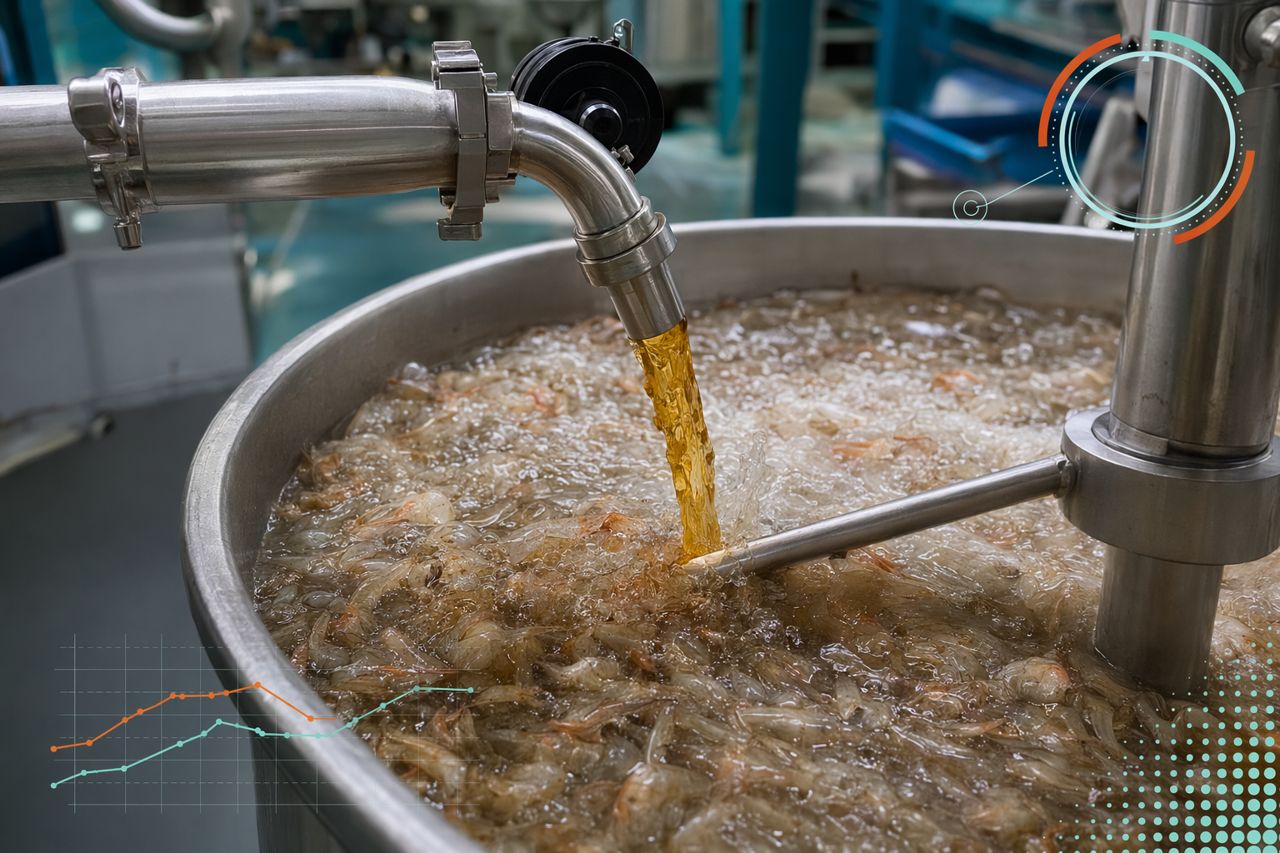
- Enzyme-assisted deproteinization
- Solid-liquid separation
- Washing
- Demineralization or chemical treatment
- Chitin drying or transfer to deacetylation
- Chitosan conversion and finishing
Carapax Flow helps identify the right point of addition based on your current equipment and bottlenecks. We do not push a single fixed layout. We look at what your plant already runs and where enzyme treatment can reduce friction.
What we help you evaluate
Before recommending a supply program, we review the practical process variables that affect enzyme performance and business value:
- Shell source and freshness profile
- Current protein removal performance
- Washing and water availability
- Existing chemical usage and pain points
- Tank design, mixing, and heating capability
- Separation method and discharge behavior
- Odor complaints or holding-time limits
- Downstream chitosan specifications
- Batch records and seasonal variation
- Target improvements for cost, yield, or quality
The result is a plant-relevant enzyme recommendation, not a generic catalog answer.
Product and supply expectations
Carapax Flow enzyme solutions are selected for shrimp shell process compatibility and industrial handling. Depending on the application, we can support trials focused on upstream chitin cleanliness, protein reduction behavior, process robustness, and chitosan consistency.
You can expect:
- B2B supply for industrial processing environments
- Technical discussion before quotation
- Batch-to-batch supply consistency
- Documentation suitable for procurement review
- Trial support for plant validation
- Clear communication on storage, handling, and process fit
- Practical scale-up guidance based on your line constraints
Common production goals we support
Plants typically contact Carapax Flow when they need to:
- Improve chitin feedstock quality for chitosan conversion
- Reduce residual protein before deacetylation
- Lower odor in shell preparation areas
- Reduce harsh chemical dependence where possible
- Improve batch-to-batch chitosan consistency
- Increase confidence when processing variable shell streams
- Add an enzyme step without disrupting existing throughput
- Secure a reliable enzyme supplier for ongoing production
Request a quote
Tell us what your shrimp shell line is trying to improve. Share your raw material type, current process outline, target production scale, and the quality issues you want to solve.
Request a quote using the on-site form, and the Carapax Flow team will respond with a practical supply and trial discussion for your chitosan production line.