Bulk Protease for Shrimp Shell Deproteinization
Carapax Flow supplies bulk protease for shrimp shell processing plants that need tighter control over deproteinization, cleaner protein liquor, reduced odor pressure, and more consistent chitin quality.
As an enzyme supplier for chitin extraction, we work with processors converting shrimp shell waste into chitin, chitosan feedstock, protein hydrolysate streams, or mineral-rich co-products. Our focus is operational: reliable supply, practical process fit, and predictable performance across changing shell inputs.
Built for controlled deproteinization
Shrimp shell protein removal is often managed with strong alkali, heat, long residence times, and repeated washing. That approach can work, but it can also increase chemical load, odor, wastewater burden, and variability in the final chitin fraction.
A protease-assisted process gives plant teams another control lever. By targeting shell-bound proteins before or alongside reduced chemical treatment, bulk protease can support:
- More complete protein release from shell matrices
- Lower dependence on aggressive caustic conditions
- Improved batch-to-batch deproteinization consistency
- Reduced odor formation during holding and downstream handling
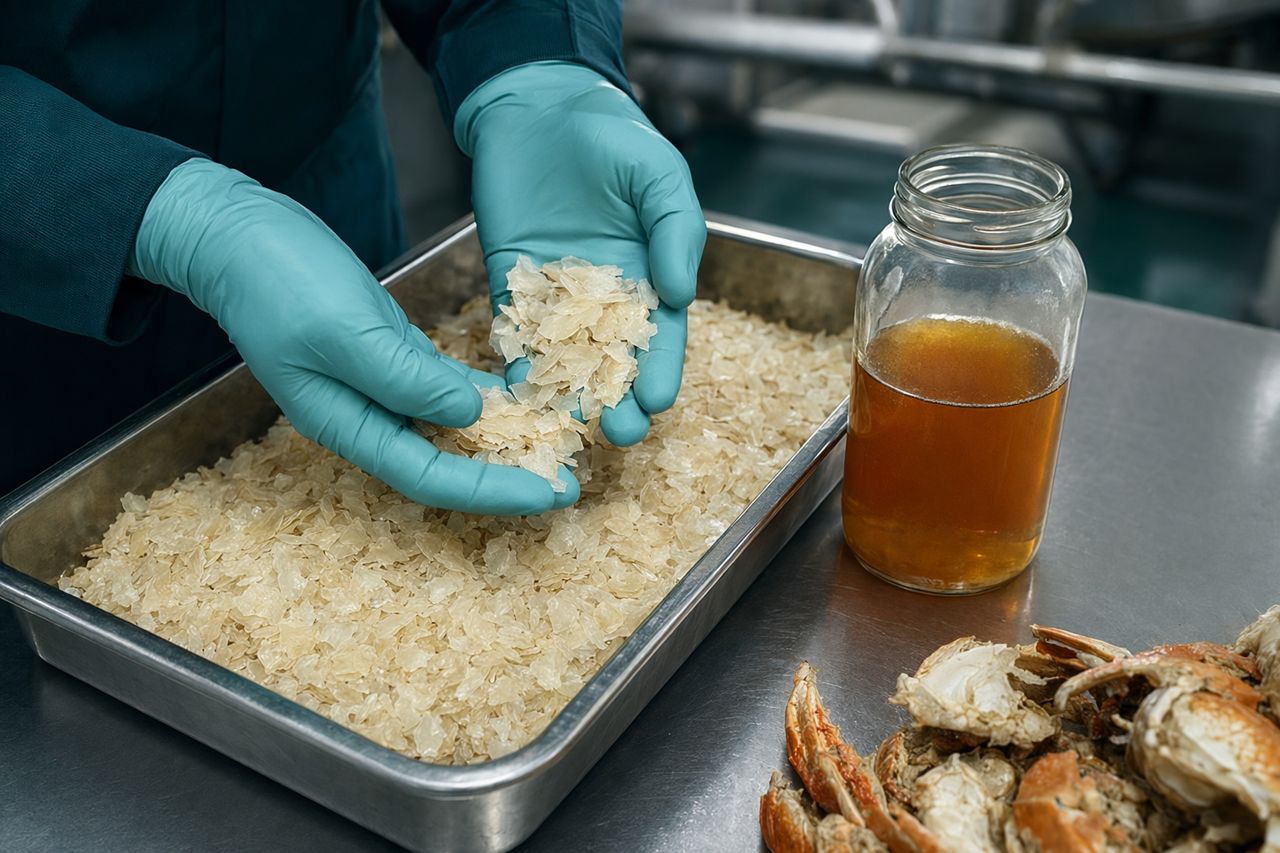
- Cleaner separation between chitin solids and protein liquor
- Better control of protein liquor quality for recovery or disposal decisions
Where protease fits in the shrimp shell line
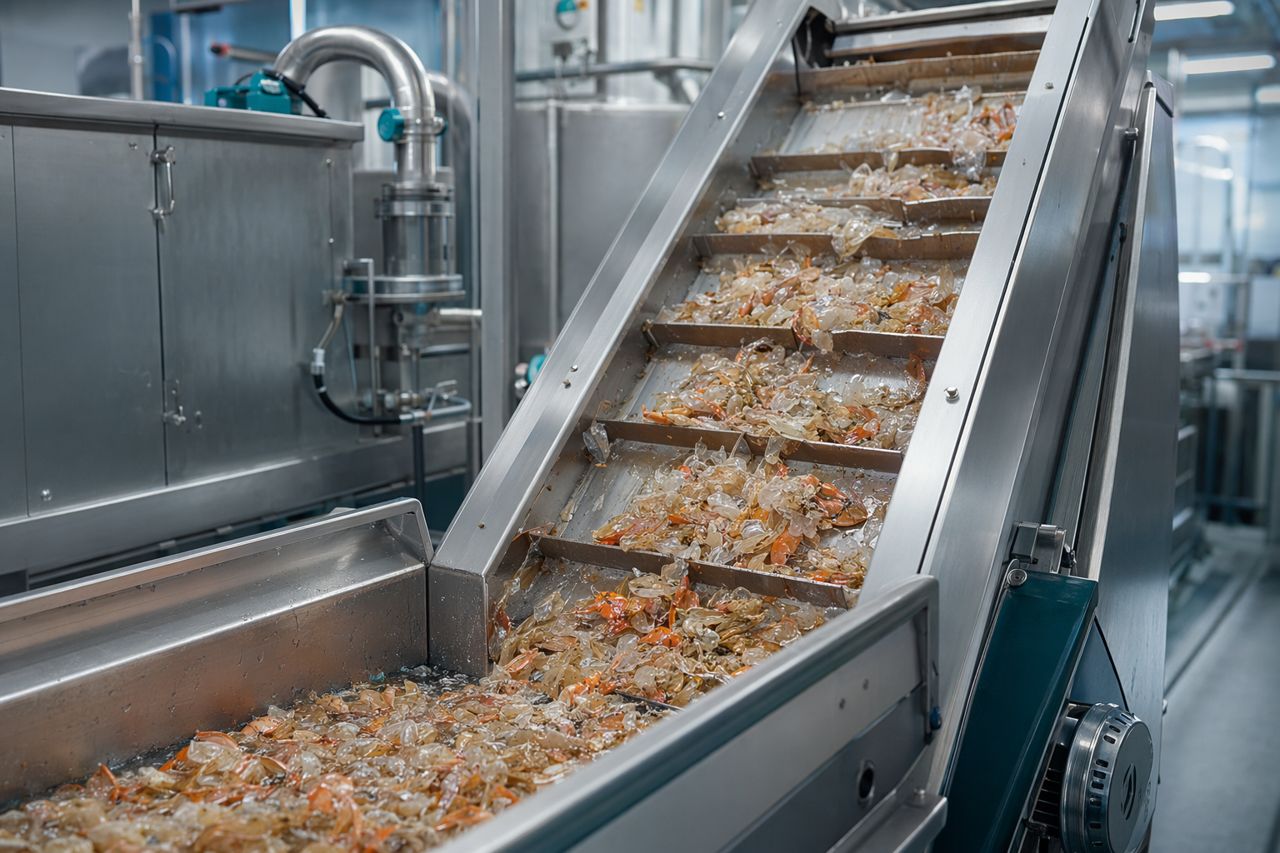
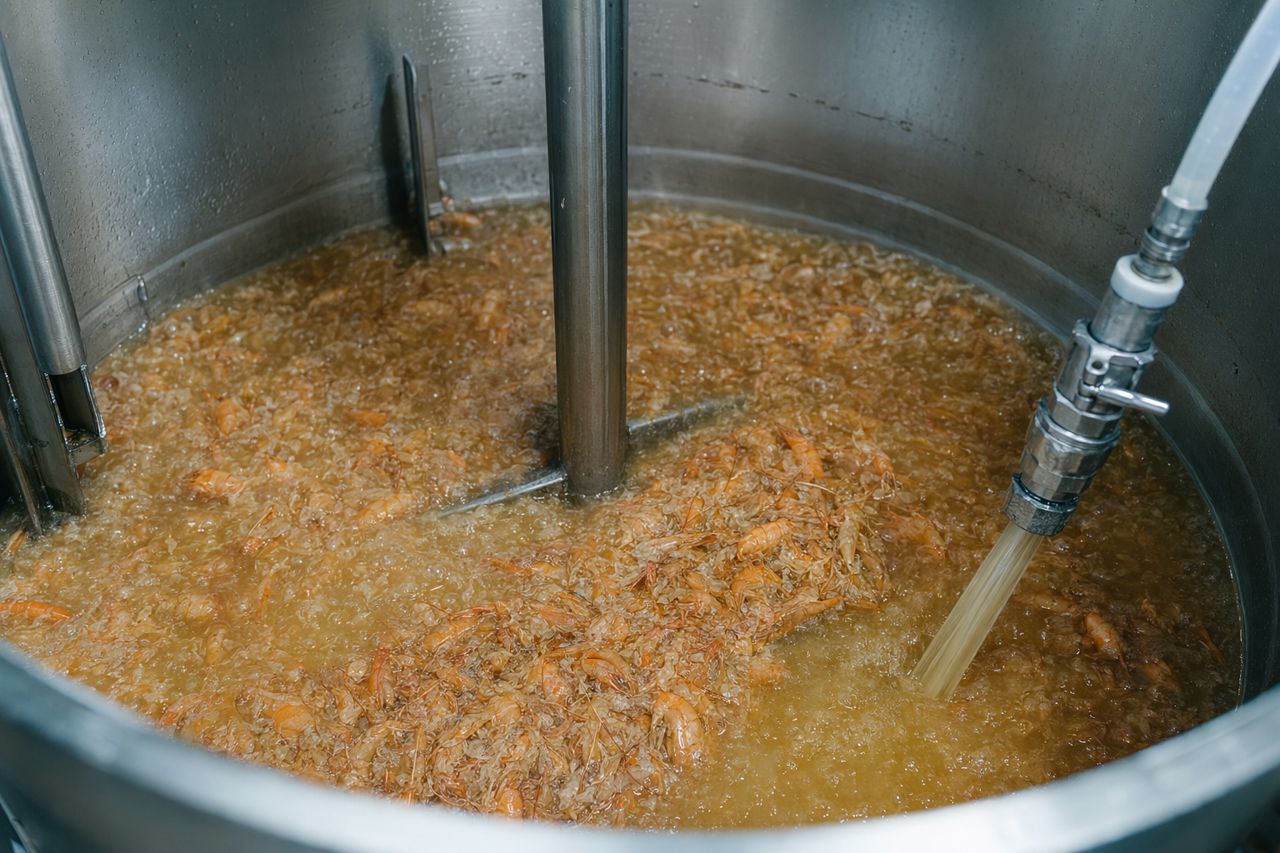
Carapax Flow protease is typically evaluated in the wet processing section after shell size reduction and washing, before final chitin purification. It can be integrated into batch tanks, agitated reactors, or controlled soak stages depending on plant layout.
Common process objectives include:
1. Improve protein release
Protease helps break down residual shrimp shell proteins so they separate more cleanly from the chitin-rich solids. This can support higher-quality intermediate chitin and reduce rework caused by incomplete protein removal.
2. Reduce chemical load
Many plants are looking to reduce harsh chemical exposure without compromising output. Enzymatic deproteinization can help lower the severity of downstream treatment conditions while maintaining practical throughput.
3. Manage odor earlier
Protein-rich shell streams can develop strong marine odor when residence time, temperature, or storage conditions drift. Faster protein breakdown and cleaner liquor separation can reduce odor pressure around tanks, drains, and sludge handling areas.
4. Protect liquor value
When protein liquor is recovered or concentrated, its quality matters. A controlled protease step can produce a more manageable liquid fraction with better consistency for further handling, blending, or evaluation as a co-product stream.
Designed for plant managers, not lab showcases
Carapax Flow does not position enzymes as a generic additive dropped into any line. Shrimp shell composition changes by species, season, peeling method, freshness, and storage time. A useful enzyme program has to match that variability.
We support buyers with:
- Bulk protease supply for production-scale shrimp shell processing
- Process-fit discussions based on tank configuration and solids handling
- Guidance for pilot trials and scale-up comparison batches
- Documentation for receiving, storage, and internal quality review
- Supply planning for recurring production schedules
- Clear commercial quotes for bulk purchasing
Practical performance targets
When processors evaluate Carapax Flow protease, the most useful success metrics are operational and commercial. We help teams focus on outcomes that matter at plant level:
- Residual protein reduction in the chitin fraction
- Wash water reduction potential
- Odor observations during and after deproteinization
- Separation behavior of solids and liquor
- Final chitin color and cleanliness
- Batch cycle stability
- Downstream chemical demand
- Protein liquor consistency
Bulk supply you can schedule around
Shrimp processing plants need enzyme supply that supports production planning. Carapax Flow is built around B2B procurement needs: clear product matching, predictable fulfillment, and direct communication with technical and purchasing teams.
For quote requests, we recommend sharing:
- Shell source and typical freshness condition
- Current deproteinization method
- Target chitin or chitosan feedstock specification
- Current pain points: odor, protein residue, chemical use, yield, or inconsistency
- Batch or continuous processing format
- Preferred packaging and delivery schedule
Request a quote for bulk protease
If your plant is evaluating enzyme-assisted deproteinization, send your process goals and expected purchasing volume through the on-site quote form. Carapax Flow will respond with a practical supply recommendation and next-step questions for trial or production planning.